


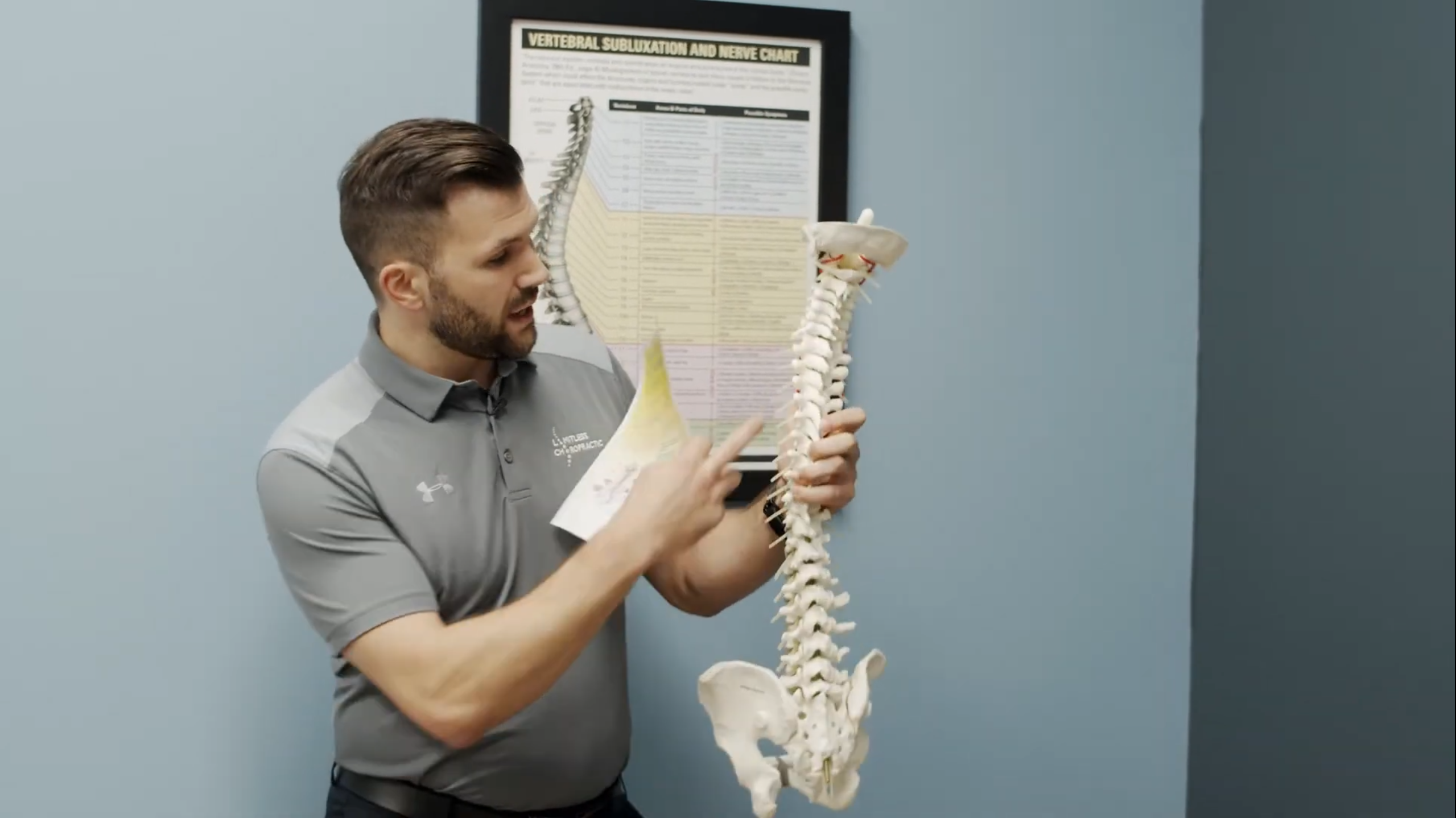


For decades, the medical establishment has viewed chiropractic and osteopathic care with a degree of skepticism, yet the clinical results often defy conventional explanation. How do these practitioners facilitate profound internal healing without the use of pharmaceutical intervention or invasive surgery?
While mainstream medicine frequently targets the chemical symptoms of disease, a groundbreaking investigation by Dr. Henry Windsor sought to uncover the "smoking gun" of structural pathology. His study remains one of the most fascinating inquiries into the anatomical proof behind the body’s ability to heal from within.
Table of Contents
- The Mystery of Drugless Healing
- The 96% Correlation: A Statistical Revelation
- Mapping the Body: The Specific Connections
- The "Choke Point" Concept
- Ancient Wisdom Meets Modern Autopsy
- Conclusion: A New Perspective on Maintenance
1. The Mystery of Drugless Healing
The central question of Dr. Windsor's work was simple: why does structural work affect internal health? While most doctors look for chemical imbalances to explain sickness, Windsor, a medical doctor based in Philadelphia, suspected that the "power line" of the body was the real culprit.
He wanted to know if the physical state of the spine could predict the presence of disease in the organs. To find out, he turned to the most objective evidence available in medicine: the autopsy.
2. The 96% Correlation: A Statistical Revelation
Dr. Windsor’s research determined if diseased organs were physically linked to misalignments in the spine, known as subluxations, that occurred in the corresponding nerve pathways. By examining the structural integrity of the vertebral column alongside the health of the internal organs, Windsor looked for a direct link between spinal decay and systemic disease.
The data he uncovered was a statistical revelation. Out of 221 diseased organs examined, 212 were found to be directly linked to spinal misalignments at the specific level responsible for that organ’s nerve supply. The staggering reality of the data led the researchers to a startling conclusion:
"Of the 221 diseased organs in the autopsy, 212 were correlated directly with areas of the spine that were subluxated or degenerated. It’s almost 100 percent. Nearly a 100 percent correlation rate."
In the world of clinical research, a 96% correlation is an astronomical figure. It suggests that what we perceive as isolated organ failure may actually be the end-stage result of a compromised neurological pathway.
3. Mapping the Body: The Specific Connections
Dr. Windsor’s findings provided a precise anatomical map. When a specific region of the spine loses its integrity, the corresponding organ pays the price. The study identified these specific correlations:
- Heart and Pericardium: All 20 cases of heart disease showed misalignments in the T1 to T5 (upper thoracic) vertebrae.
- Lungs: All 26 patients with lung disease exhibited subluxations in the T1 to T4 range.
- Stomach: All 9 cases of stomach disease were correlated with T5 to T9 misalignments.
- Liver: All 13 cases of liver disease showed subluxations in the T5 to T9 range.
- Gallbladder: All 5 cases of gallstones were linked to the T5 to T9 vertebrae.
- Pancreas: All 3 cases of pancreatic disease were tied to the T5 to T9 range.
- Spleen: All 11 cases of spleen disease were correlated with the T5 to T9 vertebrae.
- Kidneys: All 17 cases of kidney disease were linked to subluxations in the T10 to T12 (lower thoracic) area.
- Prostate and Bladder: All 8 cases of disease in these organs were linked to the L1 to L3 (upper lumbar) vertebrae.
- Uterus: Both cases of uterine conditions were linked to the L2 vertebra.
4. The "Choke Point" Concept: Understanding the Communication Loop
The mechanical theory behind Windsor’s findings rests on the "communication loop." The brain generates vital signals that travel down the spinal cord and through the nerves to every cell and organ. This is not just a physical structure. It is a high-speed data line for survival.
When a vertebra shifts out of alignment, it creates a "choke point." The power is being choked off at the source. This interference disrupts the body’s ability to maintain a full communication loop, leaving the brain unable to recognize or resolve internal dysfunction in its early stages.
Under this model, disease is rarely a localized failure of an organ. Instead, it is a failure of the brain’s power to reach that organ. When the communication is stifled, the organ begins a slow descent into pathology.
5. Ancient Wisdom Meets Modern Autopsy
Dr. Windsor’s findings did more than provide data. They validated a philosophy that dates back 2,500 years. Hippocrates, the ancient Greek physician and the father of Western medicine, famously prioritized the back as the primary focus for any healer:
"Look to the spine for the source of disease."
There is a profound irony in a modern Medical Doctor using the clinical finality of an autopsy to prove a 2,500-year-old philosophical claim. By using the tools of the medical establishment, Windsor moved the concept of spinal health from the fringes of alternative thought into the realm of documented biological reality.
6. Conclusion: A New Perspective on Maintenance
The Windsor Autopsies demand a shift in how we view the human body. The spine is not merely a structural column to be addressed only when it hurts. It is the lifeline of your internal health. While emergency medicine and surgery are indispensable for crisis intervention, Windsor’s work underscores the necessity of proactive wellness care.
Think of it in terms of basic hygiene. If you only brushed your teeth once a year, well, as the saying goes, don't breathe around me because that's just nasty. We accept daily dental maintenance to prevent decay, yet we often wait for an internal crisis before checking the integrity of our nervous system.
Closing Thought: If the health of your heart, lungs, and kidneys is tethered to the alignment of your spine, are you treating your back as a structural support or as the vital source of your internal power?



.png)


.png)
.png)